Implant dentistry in Kochi

Dental Implants in Palarivattom, Kochi

Medically reviewed by Dr Nikita Menon, Dentist with a Fellowship in Oral Implantology Reviewed 26 September 2026

A missing tooth can affect eating, speech and confidence. Dental implants are one option for replacing a tooth root and supporting a crown, bridge or denture after careful assessment of your mouth, gums and jawbone.

At 32 Sparkles Dental Clinic in Palarivattom, Dr Nikita Menon and the multispeciality team plan dental implant treatment around your oral health, medical history and restoration needs. Dr Nikita has more than 18 years of clinical experience and a fellowship in oral implantology.

Need prompt advice? Call or WhatsApp to ask about the next available assessment. Implant treatment is planned after clinical and diagnostic evaluation rather than promised as a same day procedure.
Dr Nikita Menon, implant dentist at 32 Sparkles Dental Clinic in Palarivattom, Kochi
Dr Nikita MenonGeneral, cosmetic and implant dentistry
PlanningClinical examination and appropriate imaging
AnaesthesiaUsually placed using local anaesthesia
VisitsDepends on healing and restoration needs
RestorationCrown, bridge or implant supported denture
Quick answer: 32 Sparkles Dental Clinic provides dental implant assessment and treatment planning in Kochi. The process may involve examination, imaging, implant placement, healing and fitting the final restoration, with timing determined by your individual clinical findings.
Overview

What are dental implants?

A dental implant is placed in the jawbone to act as an artificial root. After it becomes stable, it can support a visible dental restoration such as a crown for one missing tooth, a bridge for several teeth or a denture that gains support from implants.

Unlike a conventional tooth supported bridge, a single implant may replace a missing tooth without preparing the neighbouring teeth solely to hold the restoration. Unlike removable dentures, an implant supported option may offer greater stability. Neither option is automatically right for everyone.

An implant has three functional parts

  • The implant fixture placed in the jawbone
  • A connecting component called an abutment
  • The crown, bridge or denture that replaces visible teeth

Dental implants replace support below the gum as well as the visible missing tooth, but treatment must be selected after an individual assessment.

Candidacy

Who may be suitable for dental implants in Palarivattom?

An assessment may be appropriate if you

  • Have one or more missing teeth, or teeth that cannot be restored
  • Want to discuss a fixed or implant supported replacement
  • Can maintain daily oral hygiene and attend reviews
  • Have stable gum health or are prepared to seek gum disease treatment first

Treatment may need to wait or change if you

  • Have active tooth decay, infection or uncontrolled gum disease
  • Have insufficient bone without additional preparation
  • Smoke or have a medical factor that may affect healing
  • Cannot commit to hygiene, maintenance or follow up care

Suitability depends on oral health, bone, general health and long term maintenance. The number of missing teeth is only one part of the assessment.

Background

Why do people lose teeth?

A tooth may be lost after extensive decay, fracture, gum disease, infection, trauma or because it cannot predictably support a restoration. The cause matters because the surrounding teeth, gums and bone must be stabilised before replacement is planned.

Bone can change after a tooth is removed. If the available bone does not provide an appropriate foundation, the dentist may discuss grafting, an alternative implant position or a replacement without implants. Replacing a tooth is therefore not just a matter of filling a gap; it starts with understanding why the tooth was lost and what remains healthy.

Finding and controlling the cause of tooth loss helps protect both the proposed implant and the rest of the mouth.

Options

Which implant approach fits your situation?

The most useful way to compare implant treatment is by the teeth that need replacing and whether the final teeth will be fixed or removable. These are planning pathways, not packages. Suitability must be confirmed clinically.

Single tooth replacement

One implant may support one crown where a tooth is missing and the surrounding clinical conditions are suitable.

Multiple tooth replacement

Implants may support a bridge to replace several adjacent teeth without necessarily placing one implant for every missing tooth.

Fixed full arch teeth

A fixed full arch bridge may be supported by a planned number of implants. Approaches such as All on 4 or All on 6 are considered only when the bone, bite and restorative plan make them appropriate.

The number and position of implants should follow the final restoration plan. “All on 4” describes one possible configuration, not a universal answer for every full arch case.

Planning

How is dental implant treatment planned in Kochi?

Listen and assess

The visit begins with your missing tooth concerns, expectations, medical history and previous dental experience. The dentist examines your teeth, gums, bite and available space.

Collect diagnostic records

Photographs, digital scans and appropriate radiographic imaging may be used to evaluate the proposed implant site and plan the final restoration.

Stabilise oral health

Active decay, gum inflammation or infection is addressed before implant placement. Where bone or soft tissue is limited, additional procedures may be discussed.

Plan the implant and restoration

The implant position is planned with the final crown, bridge or denture in mind. Dr Nikita’s digital dentistry workflow may include oral scanning, CBCT assessment and digital implant planning where clinically appropriate.

Agree on a staged pathway

You receive an explanation of the proposed sequence, alternatives, limitations, recovery expectations and review needs before choosing whether to proceed.

A plan led by the final restoration connects the surgical position of the implant with the tooth replacement you will eventually use.

Procedure

What happens during dental implant placement?

Implant placement is generally performed using local anaesthesia. The planned site is prepared in the jawbone, the implant is positioned, and the area is closed or fitted with a healing component depending on the clinical approach.

Before placement

The team confirms the plan, site and consent, reviews relevant health information and explains the instructions for the day.

During placement

The area is numbed, the implant site is prepared and the implant is inserted according to the agreed plan. Treatment time varies with complexity and the number of sites.

After placement

You receive personalised aftercare and review instructions. A temporary restoration may be possible in selected situations but is not suitable for every case.

The procedure and temporary tooth options depend on the implant site, stability, bone, bite and wider treatment plan.

Timeline

How long does dental implant treatment take?

The full pathway may span several visits because the implant and surrounding tissues need time to heal before the definitive crown, bridge or denture is fitted. Timing varies with extraction, infection, bone grafting, implant stability, healing and the type of restoration.

Some selected cases may use an immediate approach, while others are safer with a staged sequence. A responsible timeline can only be confirmed after examination and imaging.

Your treatment schedule is based on biological healing and restoration needs, not a fixed promise made before assessment.

Treatment planning

How much do dental implants cost in Palarivattom?

There is no responsible single fee for every implant case because “a dental implant” may describe very different treatment, from one implant and crown to grafting or a complete fixed arch.

What is being replaced

The number and position of missing teeth, and whether the final restoration is a crown, bridge, removable denture or fixed full arch, affect the treatment plan.

What the site needs

Diagnostic imaging, extractions, management of infection, bone or soft tissue procedures and temporary teeth may change the clinical sequence.

How the restoration is made

Implant components, laboratory stages, restorative materials, digital planning and the complexity of the bite all contribute to the individual plan.

32 Sparkles does not provide one standard online quote for every patient. After examination and any required imaging, the dentist can explain the recommended approach, suitable alternatives and the treatment components relevant to you before you decide whether to proceed.

For an individual estimate, call or WhatsApp the clinic to arrange an implant assessment. No treatment decision should be based on price alone.

Aftercare

Recovery after dental implants

First 48 hours

Follow the clinic’s instructions for cleaning, food, medication and activity. Some soreness, swelling, bruising or minor bleeding can occur.

Week one

Protect the surgical area and attend review if advised. Contact the clinic if bleeding persists or symptoms feel unexpected.

Healing phase

Keep the rest of the mouth clean and follow the planned review schedule while the implant site heals.

Long term

Brush, clean between the teeth or implants, and attend maintenance visits. Implants and their restorations still require ongoing care.

Daily plaque control and professional maintenance remain necessary after the implant restoration is fitted.

Honest guidance

Risks and limits of dental implants

Dental implant treatment is a surgical and restorative process. Possible concerns include infection, delayed healing, failure of the implant to integrate with bone, gum or bone inflammation around an implant, aesthetic limitations, damage to nearby structures and altered sensation where nerves are close to the site.

The restoration may also need repair or replacement over time. Smoking, uncontrolled gum disease, poor plaque control and some medical factors can increase risk. Your dentist will explain the risks that apply to the proposed site and discuss reasonable alternatives.

Alternatives may include

  • A conventional dental bridge
  • A removable partial or complete denture
  • Leaving the space under professional monitoring in selected cases
  • Restoring the existing tooth where it remains predictably treatable

An implant is one replacement option, and informed consent includes its risks, maintenance needs and alternatives.

Clinical limits

When might dental implant treatment not be recommended?

The clinic may postpone or decline implant placement when proceeding would create an avoidable risk or when a different replacement is more appropriate.

  • Active infection, untreated decay or unstable gum disease
  • Inadequate bone where grafting or another plan is not suitable
  • A health condition or medication issue requiring medical coordination
  • Expectations that cannot be met safely or predictably
  • Inability to maintain oral hygiene or attend essential reviews
  • A restorable natural tooth with a reasonable prognosis

Saying “not yet” or recommending another option can be part of ethical implant care.

Your visit

What is your consultation like at 32 Sparkles?

Your priorities first

Explain what bothers you about the missing tooth, what you hope to improve and any previous treatment concerns.

A complete assessment

The dentist evaluates the missing tooth site as part of the whole mouth, including gums, neighbouring teeth and bite.

A decision you understand

You can discuss implant options and alternatives without implants, the likely stages and why one pathway may be more appropriate.

The consultation is designed to produce a diagnosis and a clear choice of appropriate options. There is no pressure to begin treatment.

Clinic approach

Digital implant planning at 32 Sparkles

32 Sparkles is moving toward a complete digital protocol for advanced dental treatment. The clinic’s stated workflow includes oral scanning, CBCT implant assessment, digital implant planning and surgical guide printing at the clinic where clinically indicated.

Digital records can help the team study tooth position, available space and the relationship between the planned restoration and implant site. Technology supports clinical judgment; it does not replace examination, diagnosis or the need to adapt a plan to the patient.

Digital tools are used to make planning more visual and coordinated while the final decision remains clinical and individual.

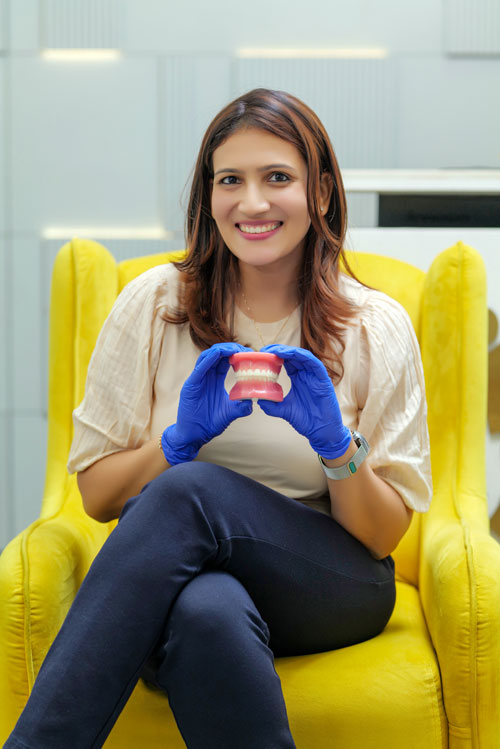
Dr Nikita Menon, implant dentist at 32 Sparkles Dental Clinic in Palarivattom, Kochi
Clinical lead

Meet Dr Nikita Menon in Kochi

Dr Nikita Menon is a Bachelor of Dental Surgery graduate of Maharashtra University of Health Sciences (2007) with more than 18 years of clinical experience across general, cosmetic and implant dentistry. Her published credentials include a Fellowship of the International Congress of Oral Implantologists, awarded in 2009. You can also learn about implantologist care in Palarivattom.

Her recent continuing education includes a three day clinical workshop in Full Mouth Implant Rehabilitation in March 2025 and a Pro Workshop on Guided Implant Surgery in March and April 2025. Her work includes digital implant planning, full mouth implants, immediate teeth protocols, full mouth rehabilitation and smile design with ceramic veneers.

Dr Nikita founded 32 Sparkles Dental Clinic in 2010 and values taking time to understand patients, explain care and help them look after their oral health. View the clinic profile and published certificates.

18+ years’ clinical experience ICOI Fellowship Guided implant surgery training Full mouth implant rehabilitation training

Dr Nikita combines implant training with restorative and digital planning for treatment that considers the whole smile and bite.

Multispeciality support when a case needs it

32 Sparkles’ published clinical team includes Dr Jaeson Painatt, MDS, Oral and Maxillofacial Surgeon, and Dr Krishnapriya, MDS, Prosthodontist. Depending on the diagnosis and treatment plan, relevant surgical or restorative input may be coordinated. Not every patient needs every specialist.

Patient experiences

What do patients say?

“Dr Nikita has been very patient with me and I couldn't ask for better results.”

Amarinder Singh

“The clinic is extremely clean and well maintained. Dr Nikita is highly skilled, patient, and takes the time to explain every procedure in detail.”

Bindi Nirvana

“Dr Nikita and team did a fantastic job. There was no pain or swelling, so I could travel back without any issues after a few days.”

Shanil Mathew

These individual experiences are shared with permission from the clinic’s published testimonials; outcomes and recovery vary by patient and procedure.

Local information

Visiting 32 Sparkles in Palarivattom

32 Sparkles Dental Clinic

Aswathy Padmavilasom Madom, MKK Nair Rd, opposite Axis Bank, Palarivattom, Kochi, Ernakulam, Kerala 682025

Phone and WhatsApp:
+91 9946 667 753

Monday to Saturday9:30 AM to 7:30 PM
Sunday9:30 AM to 3:00 PM

Finding the clinic: MKK Nair Road, opposite Axis Bank in Palarivattom. Please call if you need help with directions or have accessibility requirements before your visit.

32 Sparkles Dental Clinic View the exact clinic location and plan your route in Google Maps. Open directions

The clinic is located on MKK Nair Road in Palarivattom and can be contacted directly for directions and visit planning.

Questions

Dental implant FAQs

Are dental implants suitable for everyone?

No. Suitability depends on oral hygiene, gum health, available bone, medical history, healing factors and the proposed restoration. An examination and appropriate imaging are needed before a recommendation can be made.

Can a dental implant replace one missing tooth?

In suitable cases, one implant can support one crown. The dentist also assesses the neighbouring teeth, bite, space, gums and bone before comparing this option with a bridge or removable replacement.

Can several missing teeth be replaced with implants?

Yes, implants may support a bridge or denture for several missing teeth. The number of implants does not always match the number of missing teeth; distribution and restoration design are planned for the individual mouth.

Is dental implant placement done under local anaesthesia?

Dental implants are commonly placed using local anaesthesia. The exact approach depends on the procedure, your health and the agreed treatment plan. The dentist will explain what applies before treatment.

How long do dental implants take to heal?

Healing time varies with the implant site, bone, grafting, general health and implant stability. The definitive restoration is fitted when the clinical conditions are appropriate rather than on a universal schedule.

How much do dental implants cost in Palarivattom?

The fee depends on the number of teeth being replaced, the restoration, implant components, diagnostic records, laboratory stages and whether procedures such as grafting are needed. 32 Sparkles can provide an individual estimate after examination and any required imaging.

What can I expect after implant placement?

Some soreness, swelling, bruising or minor bleeding can occur. You will receive personalised instructions on cleaning, food, medication, activity and review. Contact the clinic if symptoms are severe, persistent or unexpected.

Do dental implants need special maintenance?

They require consistent plaque control and professional review. The cleaning method depends on whether you have a crown, bridge or denture and should be demonstrated by the dental team.

How do I arrange a dental implant consultation in Palarivattom?

Call 32 Sparkles Dental Clinic on +91 9946 667 753 or use WhatsApp on the same number. The clinic is on MKK Nair Road, opposite Axis Bank, in Palarivattom, Kochi.

Clinical references and further reading

This page combines information provided by 32 Sparkles about its implant workflow with current patient guidance from hospital dental services. It is written for patients and has been reviewed for clinical accuracy by Dr Nikita Menon.

  1. Guy’s and St Thomas’ NHS Foundation Trust: after having a dental implant
  2. Cambridge University Hospitals: dental implants in restorative dentistry
  3. Leeds Teaching Hospitals NHS Trust: dental implants
  4. 32 Sparkles Dental Clinic: Dr Nikita Menon’s clinic profile and published certificates

A consultation is the appropriate place to turn general implant information into advice based on your own examination and records.

Next step

Talk to 32 Sparkles about dental implants

If you are considering replacement for one tooth, several teeth or a full arch, contact the clinic to arrange an assessment and discuss implant options and alternatives without implants.