Full arch implant care in Kochi

Full Mouth Dental Implants in Palarivattom, Kochi

Medically reviewed by Dr Nikita Menon, Dentist with a Fellowship in Oral Implantology Reviewed 26 September 2026

Full mouth dental implants may replace all or most teeth in one or both jaws using an individually planned implant supported bridge or removable overdenture.

At 32 Sparkles Dental Clinic in Palarivattom, Dr Nikita Menon and the multispeciality team assess your teeth, gums, bone, bite and medical history before recommending a fixed or removable full arch approach. Dr Nikita has more than 18 years of clinical experience and a fellowship in oral implantology.

Need prompt advice? Call or WhatsApp to ask about the next available assessment. Full mouth implant care requires clinical and diagnostic planning before a treatment pathway or timeline can be confirmed.
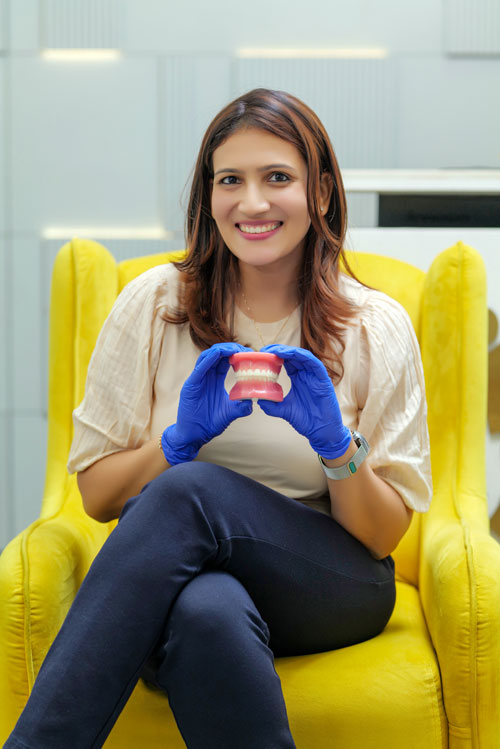
Dr Nikita Menon, full mouth implant dentist at 32 Sparkles Dental Clinic in Palarivattom, Kochi
Dr Nikita MenonGeneral, cosmetic and implant dentistry
ScopeOne jaw or both jaws based on need
OptionsFixed bridge or removable overdenture
PlanningExamination, scans, imaging and bite assessment
MaintenanceDaily cleaning and professional review
Quick answer: Full mouth dental implants use several implants to support a complete set of replacement teeth in one or both jaws. The teeth may be fixed or removable. The appropriate design, implant number and timing depend on bone, gum health, bite, medical history and the final restorative plan.
Overview

What are full mouth dental implants?

Full mouth dental implants are used when all or most teeth in an arch are missing or cannot be predictably restored. Several implants are placed in planned positions to support a complete set of replacement teeth. Treatment may involve the upper jaw, lower jaw or both.

The visible teeth may form a fixed bridge that only a dentist removes, or an implant retained overdenture that the patient removes for cleaning. This page explains full arch options. Visit the dental implants guide for a broader overview of implant treatment.

Full mouth dental implants mainly replace teeth that are missing or cannot be retained. Full mouth rehabilitation is a broader coordinated plan that may preserve and restore natural teeth using crowns, bridges, bite treatment and implants only where needed.

A full arch plan connects four elements

  • The condition of the remaining teeth and gums
  • The amount and distribution of available jawbone
  • The implant positions and connecting components
  • The fixed bridge or removable overdenture

Full mouth implant treatment is a coordinated surgical and restorative plan. It is not simply a larger version of replacing one tooth.

Candidacy

Who may consider full mouth dental implants?

An assessment may be appropriate if you

  • Have lost all or most teeth in one or both jaws
  • Have several failing teeth that cannot be predictably restored
  • Want to compare a fixed bridge with an implant retained overdenture
  • Can maintain daily oral hygiene and attend reviews
  • Have stable gum health or are prepared to seek gum disease treatment or a periodontist assessment first

Treatment may need to wait or change if you

  • Have active tooth decay, infection or uncontrolled gum disease
  • Have insufficient bone without additional preparation
  • Smoke or have a medical factor that may affect healing
  • Cannot commit to hygiene, maintenance or follow up care

Suitability depends on oral health, bone, general health, expectations and long term maintenance. The number of missing teeth is only one part of the assessment.

Background

Why does the cause of tooth loss matter?

Extensive decay, fractures, infection and gum disease may affect many teeth at the same time. The cause must be identified because active disease can also threaten implants and the tissues that support them.

Bone can change after teeth are removed or after years of wearing dentures. If the remaining bone cannot support the proposed implant positions, the dentist may discuss grafting, a different restoration design or a removable alternative. Natural teeth with a reasonable prognosis should not be removed simply to make a treatment plan more convenient.

The first goal is to control disease and decide which natural teeth can be preserved before planning replacements.

Options

Which full mouth implant approach may fit your needs?

Full mouth treatment can use different restoration designs. These are planning pathways, not packages. The final choice follows examination, imaging and restorative assessment.

Fixed full arch bridge

A complete bridge is secured to several implants and is removed only by the dental team for professional care when required.

Removable implant overdenture

Implants help retain a removable denture. The patient removes it for cleaning while gaining more support than a conventional denture may provide.

All on 4 dental implants

This fixed full arch concept uses four planned implants. It is considered only when the bone, bite and restoration design make that configuration appropriate.

All on 6 or another custom design

Some arches may use six implants or another number and distribution. More implants are not automatically better. The design must suit the available bone and final bridge.

The restoration is planned first so implant number and position can support function, cleaning and maintenance. No single configuration suits every jaw.

Planning

How is full mouth implant treatment planned?

Understand your priorities

The visit begins with concerns about eating, speech, appearance, loose teeth or dentures. The team also reviews your medical history, previous dental care and expectations.

Assess the whole mouth

The dentist examines each remaining tooth, the gums, bite, smile, jaw relationship and the space available for replacement teeth.

Collect diagnostic records

Clinical photographs, digital scans and appropriate radiographic imaging may be used to evaluate bone and plan the proposed restoration.

Compare restorative designs

The team compares fixed and removable designs, plans cleaning access and decides whether the upper jaw, lower jaw or both require treatment.

Coordinate the treatment sequence

The plan explains which teeth may be retained or removed, whether grafting is relevant, the provisional teeth, healing stages, final restoration and maintenance.

Planning begins with the teeth you need to use, clean and maintain. Implant positions are then selected to support that restoration.

Procedure

What happens during full mouth implant treatment?

The clinical sequence varies. It may include removing teeth that cannot be retained, preparing the implant sites, placing implants and fitting a provisional restoration when the clinical conditions allow.

Prepare the mouth

Active infection and gum disease are addressed. Teeth that can be retained are protected, while extractions or grafting are included only when clinically indicated.

Place the implants

The area is numbed and the implants are placed according to the surgical and restorative plan. The approach depends on the jaw, bone and number of sites.

Provide planned teeth

A provisional bridge or denture may be fitted in selected cases. Other patients need a healing period before the restoration is connected.

Immediate provisional teeth are conditional. They depend on implant stability, bone, bite and the ability to protect the restoration during healing.

Timeline

How long does full mouth implant treatment take?

The pathway normally involves several visits for assessment, disease control, surgery, reviews, healing and creation of the definitive teeth. Timing varies with extractions, infection, bone preparation, implant stability and the restoration design.

Some patients may receive provisional teeth soon after implant placement. Others are safer with a staged approach and a healing denture. The definitive bridge or overdenture is made when the clinical conditions are appropriate.

Your treatment schedule is based on biological healing and restoration needs, not a fixed promise made before assessment.

Compare options

Fixed bridge or removable overdenture?

Both approaches use implants, but they differ in how the teeth are cleaned, how much support they require and who removes the restoration.

Fixed full arch bridge

Remains attached during daily use. Cleaning requires specific brushes, flossing aids or irrigation methods beneath the bridge.

Removable overdenture

Connects to implants for retention but is removed by the patient for cleaning. It may replace more lost gum volume and can be easier to clean for some people.

Conventional denture

Does not use implants. It remains an alternative when surgery is unsuitable or a patient prefers a non implant approach.

The right option depends on anatomy, hand skills, cleaning ability, lip support, speech, bite, expectations and maintenance. The team should demonstrate how the proposed teeth will be cleaned before treatment begins.

Fixed does not mean maintenance free, and removable does not mean unstable. Each design has different advantages and responsibilities.

Aftercare

Recovery and care after full mouth implants

First 48 hours

Follow personalised instructions for cleaning, food, medication and activity. Soreness, swelling, bruising or minor bleeding can occur.

Early reviews

The team checks healing, hygiene and the provisional restoration. Contact the clinic if bleeding persists or symptoms are severe or unexpected.

Healing phase

Protect the implants from excessive force and follow the recommended diet and cleaning routine while the bone and soft tissues heal.

Long term

Clean around and beneath the restoration every day. Attend professional maintenance so the gums, implants, bridge components and bite can be reviewed.

Daily plaque control and professional maintenance remain necessary after the implant restoration is fitted.

Honest guidance

Risks and limits of full mouth dental implants

Full mouth implant treatment is a surgical and restorative process. Possible concerns include infection, delayed healing, failure of an implant to integrate, inflammation around implants, aesthetic or speech limitations, damage to nearby structures and altered sensation where nerves are close.

A provisional or definitive bridge can chip, loosen, wear or require repair. Cleaning may be more demanding than expected. Smoking, uncontrolled gum disease, poor plaque control and some medical factors can increase risk.

Alternatives may include

  • Preserving and restoring suitable natural teeth
  • A conventional complete or partial denture
  • An implant retained removable overdenture
  • A staged full mouth rehabilitation using teeth and implants where appropriate

An implant is one replacement option, and informed consent includes its risks, maintenance needs and alternatives.

Clinical limits

When might full mouth implant treatment be postponed or changed?

The clinic may postpone or decline implant placement when proceeding would create an avoidable risk or when a different replacement is more appropriate.

  • Active infection, untreated decay or unstable gum disease
  • Inadequate bone where grafting or another plan is not suitable
  • A health condition or medication issue requiring medical coordination
  • Expectations that cannot be met safely or predictably
  • Inability to maintain oral hygiene or attend essential reviews
  • Natural teeth that can be predictably retained within another restorative plan

Saying “not yet” or recommending another option can be part of ethical implant care.

Your visit

What happens at a full mouth implant consultation?

Your priorities first

Explain problems with eating, speaking, appearance, loose teeth or dentures and what you hope treatment will change.

A complete assessment

The dentist evaluates every remaining tooth, the gums, bone, jaw relationship, smile and bite before discussing replacement.

A decision you understand

Compare fixed and removable implant options, conventional dentures and tooth preserving rehabilitation where clinically possible.

The consultation is designed to produce a diagnosis and a clear choice of appropriate options. There is no pressure to begin treatment.

Clinic approach

Digital planning for a complete arch

32 Sparkles is moving toward a complete digital protocol for advanced dental treatment. The clinic’s stated workflow includes oral scanning, CBCT implant assessment, digital implant planning and surgical guide printing at the clinic where clinically indicated.

For a complete arch, digital records can help the team study the planned tooth position, available restorative space, bite and relationship between the bridge and implant sites. Technology supports clinical judgment. It does not replace examination, diagnosis or adaptation during treatment.

Digital tools are used to make planning more visual and coordinated while the final decision remains clinical and individual.

Dr Nikita Menon, full mouth implant dentist at 32 Sparkles Dental Clinic in Palarivattom, Kochi
Clinical lead

Full mouth implant planning with Dr Nikita Menon

Dr Nikita Menon is a Bachelor of Dental Surgery graduate of Maharashtra University of Health Sciences (2007) with more than 18 years of clinical experience across general, cosmetic and implant dentistry. Her published credentials include a Fellowship of the International Congress of Oral Implantologists, awarded in 2009. You can also learn about implantologist care in Palarivattom.

Her recent continuing education includes a three day clinical workshop in Full Mouth Implant Rehabilitation in March 2025 and a Pro Workshop on Guided Implant Surgery in March and April 2025. Her work includes digital implant planning, full mouth implants, immediate teeth protocols, full mouth rehabilitation and smile design with ceramic veneers.

Dr Nikita founded 32 Sparkles Dental Clinic in 2010 and values taking time to understand patients, explain care and help them look after their oral health. View the clinic profile and published certificates.

18+ years’ clinical experience ICOI Fellowship Guided implant surgery training Full mouth implant rehabilitation training

Dr Nikita combines implant training with restorative and digital planning so the proposed teeth, bite, implant positions and maintenance needs are considered together.

Multispeciality support when a case needs it

32 Sparkles’ published clinical team includes Dr Jaeson Painatt, MDS, Oral and Maxillofacial Surgeon, and Dr Krishnapriya, MDS, Prosthodontist. Depending on the diagnosis and treatment plan, relevant surgical or restorative input may be coordinated. Not every patient needs every specialist.

Informed decisions

Questions to ask before choosing full mouth implants

Which teeth can be saved?

Ask why each remaining tooth is being retained or removed and whether a tooth preserving plan is reasonable.

Why this restoration design?

Ask why a fixed bridge, removable overdenture, All on 4, All on 6 or another design suits your anatomy and needs.

How will I maintain it?

Ask for a cleaning demonstration, professional review schedule and explanation of components that may wear or need repair.

A clear plan should explain alternatives, limitations, maintenance and what happens if treatment conditions change.

Local information

Visiting 32 Sparkles in Palarivattom

32 Sparkles Dental Clinic

Aswathy Padmavilasom Madom, MKK Nair Rd, opposite Axis Bank, Palarivattom, Kochi, Ernakulam, Kerala 682025

Phone and WhatsApp:
+91 9946 667 753

Monday to Saturday9:30 AM to 7:30 PM
Sunday9:30 AM to 3:00 PM

Finding the clinic: MKK Nair Road, opposite Axis Bank in Palarivattom. Please call if you need help with directions or have accessibility requirements before your visit.

32 Sparkles Dental Clinic View the exact clinic location and plan your route in Google Maps. Open directions

The clinic is located on MKK Nair Road in Palarivattom and can be contacted directly for directions and visit planning.

Questions

Full mouth dental implant FAQs

Do full mouth dental implants replace every tooth with an implant?

No. A complete bridge or overdenture is normally supported by a planned number of implants. The number and position depend on the jawbone, restoration design, bite and clinical findings.

What is the difference between fixed teeth and an implant overdenture?

A fixed bridge remains attached and is removed only by the dental team when required. An implant overdenture gains support from implants but is removed by the patient for daily cleaning.

Are All on 4 and full mouth dental implants the same?

All on 4 is one full arch approach using four planned implants. Full mouth dental implants is a broader term that can include All on 4, All on 6, another fixed design or an implant retained removable overdenture.

Can I have full mouth implants in both jaws?

Some patients need treatment in one jaw and others in both. Each arch is assessed separately because bone, remaining teeth, bite and restoration needs may differ between the upper and lower jaws.

Can I receive temporary teeth on the day implants are placed?

A provisional restoration may be possible in selected cases. It depends on implant stability, bone, bite and the ability to protect the restoration during healing. It cannot be promised before assessment.

What if I have bone loss or gum disease?

Active gum disease needs assessment and control. Bone loss may change implant position, restoration design or the need for grafting. In some cases a removable or staged alternative is more appropriate.

How do I clean a full arch implant bridge?

Daily cleaning is required around the implants and beneath the bridge using the method demonstrated by the dental team. Professional reviews are also needed to assess the tissues, bridge components and bite.

How do I arrange a full mouth implant consultation in Palarivattom?

Call 32 Sparkles Dental Clinic on +91 9946 667 753 or use WhatsApp on the same number. The clinic is on MKK Nair Road, opposite Axis Bank, in Palarivattom, Kochi.

Clinical references and further reading

This page combines information provided by 32 Sparkles about its full mouth implant workflow with current patient guidance from hospital and professional dental sources. It is written for patients and has been reviewed for clinical accuracy by Dr Nikita Menon.

  1. Guy’s and St Thomas’ NHS Foundation Trust: dental implants overview
  2. Cambridge University Hospitals: dental implants in restorative dentistry
  3. American College of Prosthodontists: dental implant questions
  4. National Institute of Dental and Craniofacial Research: gum disease
  5. 32 Sparkles Dental Clinic: Dr Nikita Menon’s clinic profile and published certificates

A consultation is the appropriate place to turn general implant information into advice based on your own examination and records.

Next step

Discuss full mouth dental implants with 32 Sparkles

If many teeth are missing, loose or cannot be restored, arrange an assessment to compare fixed full arch teeth, an implant retained overdenture and appropriate alternatives.